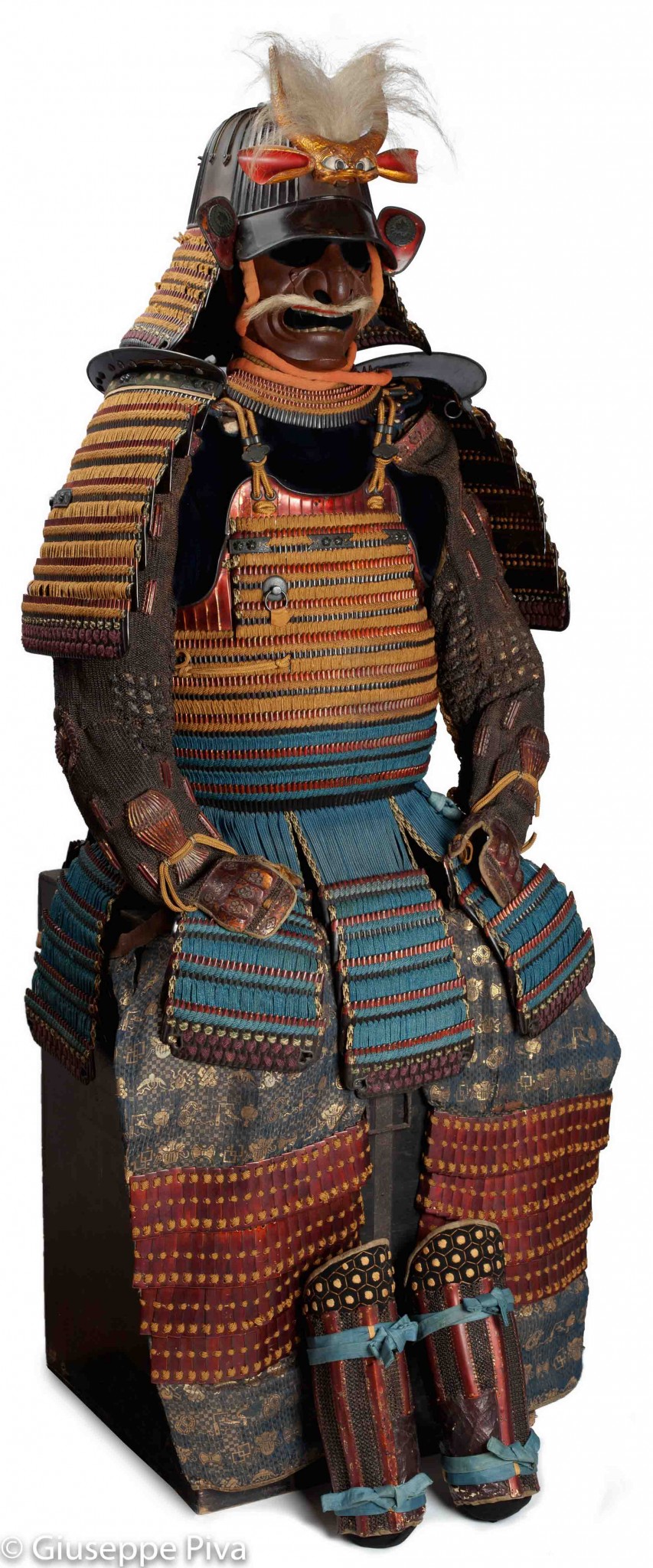
Ni-mai-do tosei gusoku
Mid Edo period (1615-1867), 18th century
Exhibitions:
"Samurai - Passato e presente", Novara 2012
Literature:
G.Piva - S. Verrina, Samurai - Passato e presente, cat. A1, Novara 2012
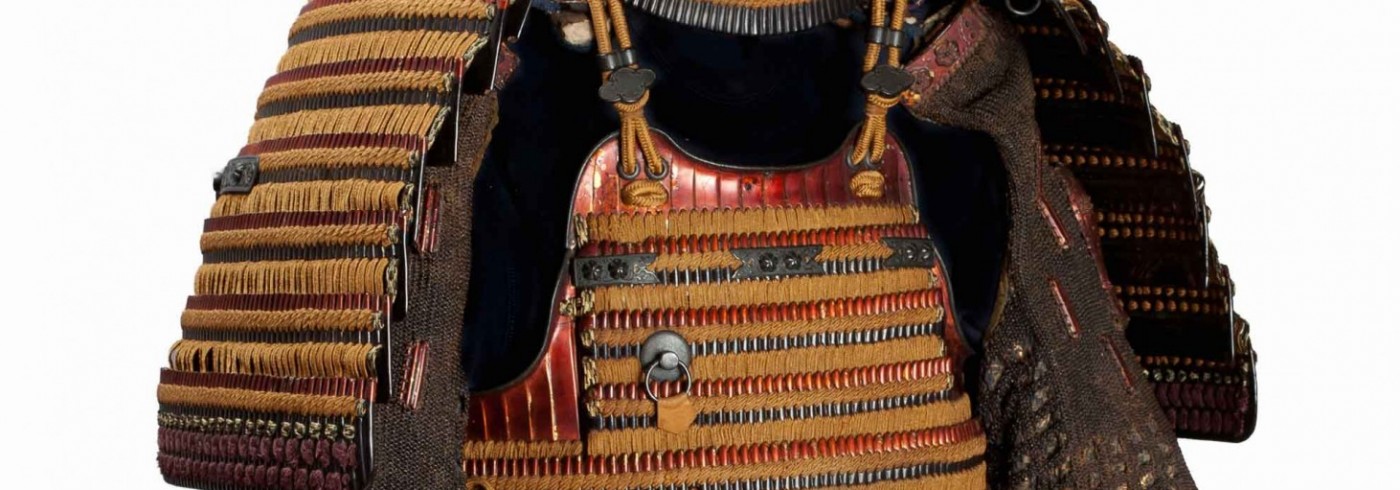
This japanese armor features a rare lacquer made covering a gold-lacquered surface with a transparent layer of red lacquer which let the underneath precious metal to shine through. The kiritsuke kozane plates are in fact lacquered in two parts: the top one in byakudan-nuri and the bottom one in black, hence showing of a striped surface on the whole armour, with those two colors divided by the orange or the blue of the tight silk kebiki odoshi lacing.
The helmet (kabuto) is of suji-bachi construction, of tall shape (koseizan), made with 62 plates, covered in the cardinal directions with large copper lacquers decorated with shakudo and gilt-copper shinodare, descending from a rich tehen-no-kanamono (fitting for the central hole) of the same materials. Also other kanamono of the armour, including toggles, are made in carved shakudo.
This particular lacquer is typical of Kaga’s armor-smiths, famous for their fine and richly decorated armors. Although the configuration of this samurai armor is manly classic, there are various elements typical of this region as the hart-shaped holes (inome, latterly boar’s eyes) and the quatrefoil-shaped buttons (mokko). The unusual haidate (tight guard) of kobakama type, to be worn as trousers, is also a feature linked with this style. The helmet is fitted with a very good original maedate representing the head of a shikami, demon of the Japanese tradition, lacquered in byakudan gold and probably belonged to the same region.
SKU: gus-620-RLo
